Cost Guide · Pumping · Updated October 2026
Septic Tank Pumping Cost in Flagstaff, AZ
As of October 2026, routine septic tank pumping in the Flagstaff, AZ / Coconino County area costs $300–$600 for a standard 1,000-gallon tank. Smaller 500–750 gallon tanks run about $200–$350, large 2,500-gallon tanks $700–$1,000, and a lid buried without a riser adds $50–$200 in digging time. Flagstaff Septic Pros can connect you with a local septic pumping provider for a quote specific to your tank and your address.
This page covers pumping only -- the routine truck visit that empties the tank. Every figure is national or regional 2026 cost-guide data, dated and sourced below, because no Flagstaff or Coconino County septic hauler publishes a rate card and no cost-guide site breaks Flagstaff out as its own market. The closest Arizona data point is a Phoenix-area range of $360–$600, which sits inside the national range rather than above or below it. For the whole-system picture -- repairs, drainfields, new installs -- see the septic system cost guide; for how often a tank actually needs this visit, see how often to pump a septic tank.
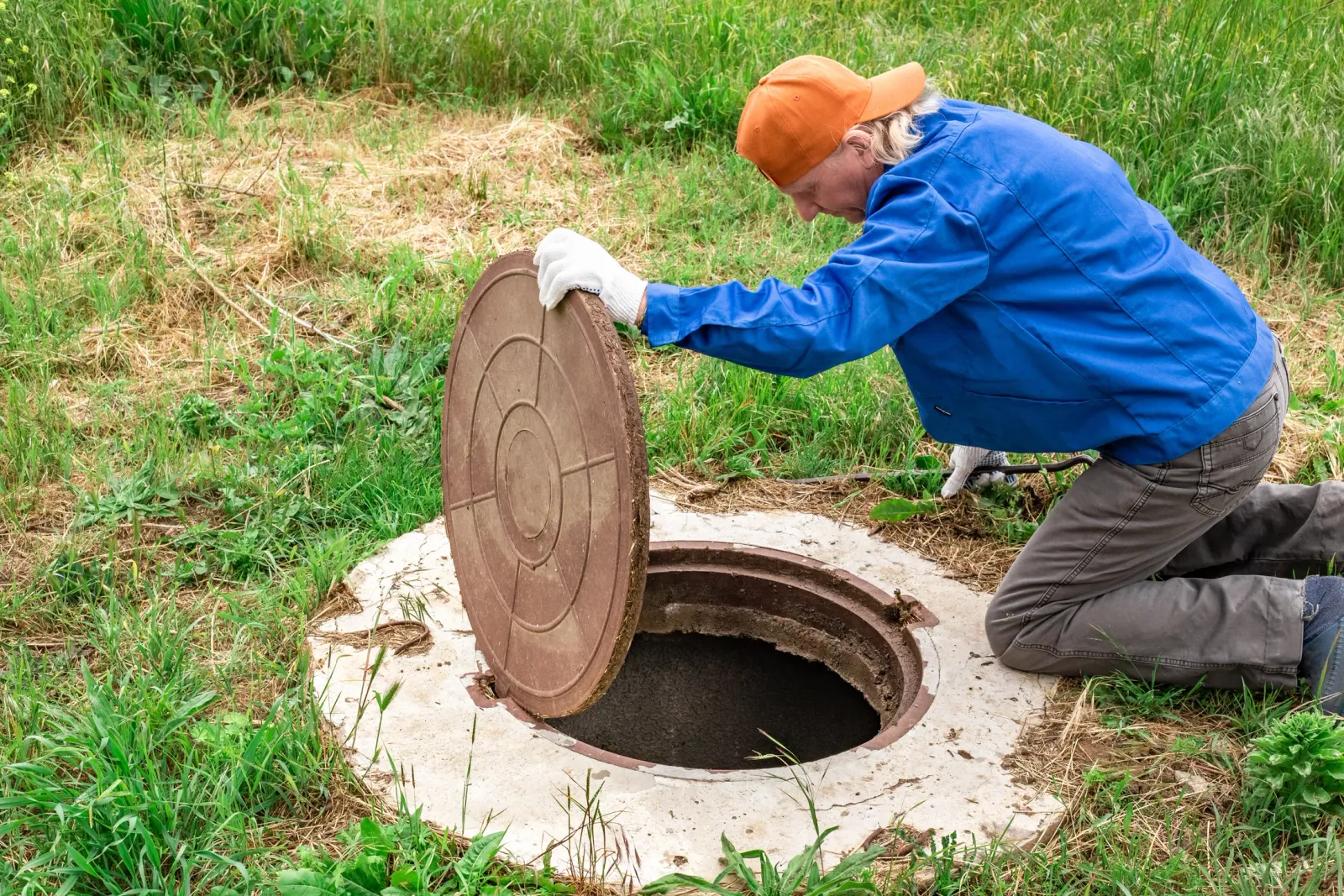
Septic Pumping Cost by Tank Size (2026)
Tank size is the single biggest driver of the pumping bill, because haulers price largely by the gallon -- roughly $0.30–$0.70 per gallon nationally. Most 3-bedroom homes have a 1,000-gallon tank; if you don't know yours, the county permit record or a previous pumping receipt will usually say.
| Tank size | Typical pumping cost | Notes |
|---|---|---|
| 500–750 gallons | $200–$350 | Older cabins and 1–2 bedroom homes. The figure already used across this site; HomeGuide's 750-gallon row ($225–$525) brackets it. |
| 1,000 gallons (standard, 3-bedroom) | $300–$600 | The canonical figure on this site. Angi's 2026 national typical range is $292–$565 (average $428); HomeGuide's 1,000-gallon row is $300–$700. |
| 1,250 gallons | $375–$875 | 4-bedroom homes and higher fixture counts. National (HomeGuide). |
| 1,500 gallons | $450–$1,050 | 5-bedroom homes. National (HomeGuide). |
| 1,750 gallons | $525–$1,225 | 6+ bedrooms or multi-family. National (HomeGuide). |
| 2,500 gallons | $700–$1,000 | Large homes and some commercial tanks; may need two truck loads. The figure already used across this site. |
The 500–750 and 2,500-gallon rows and the $300–$600 headline are the figures this site has published since August 2026 (national 2026 cost-guide data -- see the cost guide's methodology note), kept so every page here agrees. The 1,250–1,750 rows and the per-gallon rate are HomeGuide national figures (byline October 2023 -- the oldest source on this page, used only where no newer by-size data exists). Angi's 2026 figures are shown alongside as a cross-check. None of these is a Flagstaff quote.
What a Standard Pumping Visit Includes -- and What It Doesn't
A routine visit is shorter than most homeowners expect: HomeGuide puts it at roughly 20–60 minutes for a standard tank once the truck is parked and the lid is open. In that time the hauler pumps out all three layers -- the floating scum, the liquid, and the settled sludge -- takes a quick look at the inlet and outlet baffles and the liquid level, and closes the lid. That is what the $300–$600 range buys.
Where quotes diverge is in what gets added on top. The items below are each legitimate services; the point is to know which ones a quote already includes before you compare it with another company's number.
| Add-on | Typical cost | When it comes up |
|---|---|---|
| Digging to a buried lid | $50–$200 | Tank has no riser and the lid sits under soil, sod, landscaping or snow. Billed as extra labor time. |
| Installing an access riser | $200–$400 | A one-time fix that brings the lid to grade (8–24 in. risers, concrete or plastic) so every future visit skips the digging charge. National (Angi). |
| Effluent filter cleaning | $100–$400 | Newer tanks have a filter on the outlet baffle; it should be rinsed at every pumping. Some haulers include it, some don't. National (HomeGuide). |
| Jet-cleaning the tank walls | $200–$300 | Washing hardened sludge off the walls and floor after the tank is empty. Worth it on a tank that has gone far too long between pumpings; unnecessary on a tank pumped on schedule. National (HomeGuide). |
| Full tank cleaning (pump + wash-down) | $400–$1,000 | The pumping and jet-cleaning bundled as one job. National (Angi, 2026). |
| Inspection added to the visit | $150–$450 | A documented condition check of baffles, tank walls and drainfield. Often required for a home sale -- see the inspection page. National (HomeGuide). |
| Trip / mileage charge | No published figure | Some haulers add one for outlying Coconino County addresses or long hose runs. Neither national guide prices it; ask before dispatch. |
What Moves the Price Around Flagstaff Specifically
1. Distance from the truck's base
Every community this site covers -- Doney Park, Timberline and Fernwood to the northeast, Fort Valley to the northwest, Mountainaire to the south, Parks, Baderville and the Williams area to the west -- is septic-served precisely because it sits outside the City of Flagstaff's sewer. That also means it sits a real drive from wherever the pump truck is based, and a Williams-area address and a Doney Park address are in opposite directions. Trip charges are the one add-on neither national cost guide prices, so the honest answer is to ask each company whether your address carries one and how much.
2. Winter access: snow, frozen ground, and the buried lid
Flagstaff averages roughly 108 inches of snow a year, and both the City of Flagstaff's and Coconino County's building design criteria put the frost line at 30 inches at this elevation -- the ground here freezes deep and stays frozen. A tank lid that is a 10-minute dig in September can be a much longer job under snowpack or frozen soil in January, and that time shows up as the $50–$200 digging charge rather than as a seasonal rate. A plowed driveway the truck can actually reach matters too. Two practical consequences: if your tank is due in the next six months and winter is coming, a fall visit is usually the cheaper one; and if your lid is buried, a riser ($200–$400, one time) pays for itself quickly against repeated digging charges.
3. Seasonal cabins and how long the tank has waited
Some of the housing stock in these communities is seasonal or second-home, and tanks on those properties are often pumped on an irregular schedule or not at all for many years. A tank that has gone well past its interval carries a hardened sludge layer that pumps slowly and may call for jet-cleaning ($200–$300) -- so the first visit after a long gap tends to land at the top of the range, and later visits on a regular schedule land lower.
4. Engineered and aerobic systems
Mountainaire and other poor-soil lots often have an aerobic treatment unit or another engineered system rather than a simple gravity tank. Those systems still need pumping, but they also carry a service contract ($200–$400 per year) and have mechanical components the hauler should not disturb -- so confirm the company has pumped your type of unit before, and whether the pumping is already part of the maintenance contract. See the conventional vs. engineered guide for which communities this applies to.
5. Tank age in the older subdivisions
Older tanks -- and Mountainaire's original systems date to the early-1960s subdivision recording -- are more likely to have corroded or missing baffles, a cracked lid, or no effluent filter at all. None of that changes the pumping price itself, but it is the moment those problems get found, and a finding usually becomes a separate repair quote from a different trade (see the licensing note below).
The Real Cost of Pumping Is Per Year, Not Per Visit
Spread across the 3–5 year interval most conventional tanks in this area run on, the $300–$600 visit works out to roughly $60–$200 per year -- a figure derived from the headline range and the site's own interval guidance, not a published number. The comparison that matters is against the failure it prevents: solids that overflow an un-pumped tank clog the drainfield, and a drainfield replacement runs $5,000–$15,000 for a conventional field or $10,000–$20,000 for a mound or engineered one. Our pumping-interval guide walks through how household size and tank size change your actual interval, and the maintenance page covers everything else that keeps the field healthy between visits.
Who Does the Pumping -- and Which License to Ask For
In Arizona, septic pumping and hauling is permitted through the Arizona Department of Environmental Quality's septage hauler program -- not the Registrar of Contractors. A pumping-only company will never appear in an ROC license search, and that is expected, not a warning sign; what you ask for instead is the company's ADEQ hauler permit number. Repairs to the tank, baffles or drainfield are a separate trade licensed by the ROC under R-41/C-41/CR-41, so if the hauler finds a problem during the visit, the repair quote normally comes from a different contractor. Our licensing explainer walks through both lookups.
Getting a Quote You Can Actually Compare
Pumping is the one septic job that can be quoted reasonably well over the phone, because the variables are few: tank size, whether the lid is at grade or buried, how far the truck has to drive, and when it was last pumped. Have those four answers ready and ask each company the same questions: Is the price for the tank size I described, or a flat rate? Does it include digging to the lid if it's buried, or is that extra? Is there a trip charge for my address? Is filter cleaning included? Will I get a written note of the tank's condition? A company that answers all five plainly is giving you a number you can set beside the next one.
Two comparisons to avoid: don't weigh a quote that includes jet-cleaning against one that doesn't as if they were the same job, and don't treat the lowest phone quote as final if it assumed a riser you don't have. The ranges above are the planning envelope; the site visit -- or your honest description of the lid and the driveway -- is what turns them into a price.
Get a Pumping Quote for Your Tank
Tell us your community and tank size and Flagstaff Septic Pros will connect you with a local septic pumping provider for a quote.
Frequently Asked Questions
How much does it cost to pump a septic tank in Flagstaff, AZ?
As of October 2026, routine septic tank pumping in the Flagstaff / Coconino County area runs $300–$600 for a standard 1,000-gallon tank. Smaller 500–750 gallon tanks come in around $200–$350, large 2,500-gallon tanks run $700–$1,000, and digging to a buried lid without a riser adds $50–$200. No Flagstaff hauler publishes a rate card, so these are national 2026 cost-guide figures; the nearest Arizona data point is a Phoenix-area range of $360–$600.
What is included in a standard septic pumping visit?
A standard pumping visit covers locating and opening the tank lid, pumping out the liquid, sludge and scum layers, a quick visual look at the inlet and outlet baffles and the liquid level, and closing the lid back up. Jet-cleaning the tank walls ($200–$300 extra), cleaning an effluent filter ($100–$400), a formal inspection ($150–$450) and installing an access riser ($200–$400) are separate line items -- ask which of them a quote includes before you compare it to another.
Why does a rural Coconino County property sometimes cost more to pump?
Because the truck has to get there and the tank has to be reachable. Haulers working Doney Park, Fort Valley, Mountainaire, Parks or the Williams area may add a trip or mileage charge for long drives, and a lid buried under soil, snow or landscaping adds digging time ($50–$200). No published figure exists for a Flagstaff-area trip charge, so ask whether one applies to your address before the truck is dispatched.
Is it cheaper to pump a septic tank in summer or winter in Flagstaff?
There is no published seasonal price difference, but a winter visit can cost more in practice. Flagstaff averages roughly 108 inches of snow a year, and a buried lid under snow or frozen ground takes longer to reach than the same lid in September -- which is billed as extra digging time ($50–$200) rather than a seasonal surcharge. The cheapest pumping visit is one where the tank already has a riser at grade and the driveway is clear.
Does a septic pumping company in Arizona need a contractor license?
Not an ROC license -- pumping and hauling is permitted separately through the Arizona Department of Environmental Quality's septage hauler program, so a pumping-only company will not show up in a Registrar of Contractors search and that is expected. Ask the company for its ADEQ hauler permit number. Repairs to the tank or drainfield are a different trade (ROC R-41/C-41/CR-41), so a hauler who finds a problem will typically refer that work out.
Sources and Dates
Headline $300–$600, 500–750 gal, 2,500 gal and buried-lid digging figures: as published on this site's cost guide since August 2026 (sourced there to national 2026 cost guides -- see that page's methodology note). By-size rows for 1,250–1,750 gallons, per-gallon rate, jet-cleaning, filter-cleaning, inspection and visit-duration figures: HomeGuide, septic tank pumping cost (national; byline October 2, 2023; read October 21, 2026). National average, typical range, Phoenix row and full tank cleaning: Angi, cost to pump a septic tank (national; updated October 14, 2026; read October 21, 2026). Riser installation: Angi, what is a septic tank riser (national; updated July 9, 2026). Snowfall: Discover Flagstaff weather page (108.8 inches annual average, read September 2026). Frost line: City of Flagstaff Building Design Criteria (30 inches, read September 2026). ADEQ hauler vs. ROC R-41 licensing: as already stated on this site's licensing explainer. No Flagstaff-specific published pumping price exists as of this writing; every dollar figure above is national or Phoenix-area data and is labelled so.